What to Consider When Choosing a Pump for Wastewater Systems
Posted by shanying lis
3 views
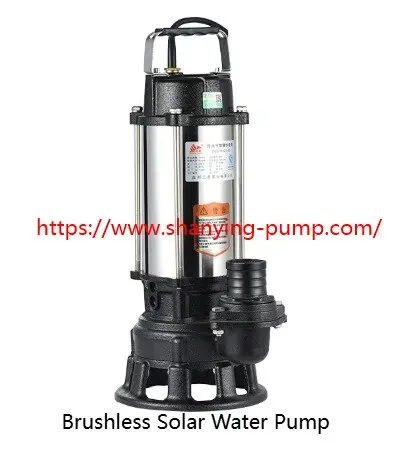
Wastewater systems operate in environments where liquid conditions can change throughout the day. Drainage channels, collection tanks, treatment facilities, and industrial sites may contain water mixed with sediment, organic matter, or other suspended materials. In these settings, a Wastewater Submersible Pump provides a practical way to move liquid from submerged positions into connected discharge systems. Its suitability depends not only on pumping capability but also on how its materials, internal structure, and installation features respond to the conditions in which it operates.
The materials used in wastewater pumps influence their durability, maintenance requirements, and suitability for different applications. The pump casing must provide structural support while remaining compatible with the liquid environment. Cast iron is commonly used in industrial pump construction because of its strength and ability to withstand demanding service conditions. Stainless steel may be considered when corrosion resistance, surface cleanliness, or particular wastewater characteristics make it appropriate. The final choice should reflect the nature of the liquid and the conditions surrounding the installation.
Material selection should extend beyond the external casing. The impeller, shaft, fasteners, and sealing components also interact with operating conditions. Suspended particles can gradually wear exposed surfaces, while certain wastewater compositions may affect materials through corrosion or chemical exposure. A suitable combination of materials helps address these challenges and supports more predictable maintenance planning. Buyers should therefore examine the complete construction instead of judging a pump only by the appearance or material of its outer housing.
Sealing materials deserve particular attention because they help protect the motor from liquid entering the internal compartment. Their compatibility with the operating environment can influence service life and equipment reliability. The quality of the sealing arrangement, together with careful assembly, contributes to the protection of internal electrical components. For applications involving challenging wastewater conditions, buyers should understand how the manufacturer approaches sealing, corrosion protection, and component maintenance.
A useful selection process begins with identifying what the pump will handle. Wastewater from residential drainage, commercial buildings, manufacturing facilities, and treatment plants can differ considerably in composition. Some applications involve relatively ordinary drainage water, while others contain fibers, sludge, or particles that may affect the flow passage. Understanding these differences helps buyers identify a suitable pump structure and avoid choosing equipment that is poorly matched to the intended application.
The installation environment is equally important. A pump placed in a narrow collection pit may require a different arrangement from equipment installed in a larger treatment tank. Buyers should consider available space, discharge direction, pipe connections, access for removal, and the way the pump will be controlled. They should also evaluate whether the equipment will remain in a fixed position or need to be transferred between different locations. These practical details can influence both product selection and the overall convenience of installation.
The internal structure determines how wastewater enters the pump, passes through the impeller area, and moves toward the discharge outlet. Different impeller designs serve different fluid-handling requirements. Some structures are intended for general drainage, while others are developed to accommodate wastewater containing suspended solids or fibrous materials. Buyers should examine whether the internal arrangement matches the liquid characteristics, particularly when the system may encounter debris that could interfere with normal flow.
The passage through the pump is important because accumulated materials can affect operating continuity. A design with an unsuitable flow path may be more vulnerable to blockages under certain conditions. For this reason, purchasing decisions should take account of the type of wastewater, the presence of solid matter, and the manufacturer's guidance on suitable applications. Accessibility for inspection and cleaning is also worth considering, especially in installations where removing the pump involves additional work.
Motor protection is another essential functional consideration. Since the motor operates while the pump is immersed, the housing and sealing arrangement must prevent water from reaching electrical components. Thermal protection and compatible control equipment can provide additional support under abnormal operating conditions. These features should be considered as part of the complete pumping system rather than as isolated product details. A suitable control arrangement can also help coordinate equipment operation with the wider drainage process.
The user experience of wastewater pumping equipment is closely connected to installation convenience. In fixed drainage systems, guide rails and automatic coupling arrangements can make it easier to position or remove equipment without repeatedly entering a collection chamber. For applications requiring movement between locations, a portable structure and practical lifting arrangement may be more useful. Buyers should consider how installation and removal will be performed by the people responsible for maintaining the system.
Automatic control can simplify routine operation. Float switches or compatible liquid-level control systems help coordinate pump activity with changes in water levels. This reduces the need for continuous manual intervention and allows the equipment to work as part of a broader drainage arrangement. The control method should match the installation and include appropriate electrical and operational safeguards. Maintenance access also affects everyday management, particularly when components require periodic inspection or replacement.
Although wastewater pumps are primarily functional products, their physical design still matters. A compact housing can be useful in restricted spaces, while a stable base helps the equipment remain properly positioned. The location of the discharge outlet, lifting points, cable entry, and connection surfaces can influence how easily the pump fits into an existing system. Protective coatings and carefully finished surfaces may also help suitable materials withstand environmental exposure, depending on the application. A well-organized external structure can make handling, cleaning, and inspection more convenient.
Taizhou Shanying Pump Co., Ltd. provides pumping equipment for water transfer and drainage applications. When comparing products for a wastewater project, buyers can assess liquid characteristics, material compatibility, impeller structure, sealing arrangements, installation methods, and maintenance requirements together. Considering these aspects as part of one purchasing decision helps create a clearer understanding of how the equipment will fit into the intended system. Further information about the company's products and pumping solutions is available at https://www.shanying-pump.com/.