From Manufacturing to Maintenance: Understanding Roller Design
Posted by Baixiao lis
3 views
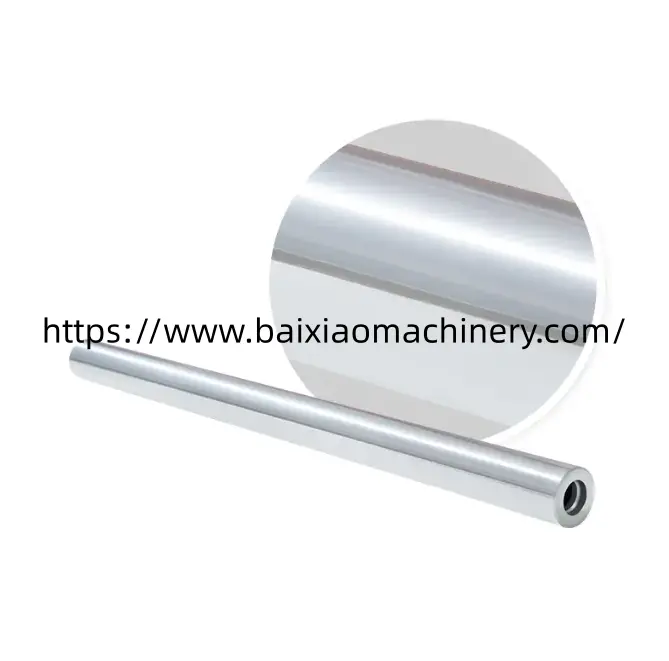
Industrial machinery often relies on rotating components to support contact between equipment and the materials being processed. In these applications, a Steel Roller can provide a durable working surface for guiding, supporting, pressing, or transferring products through a production line. Its suitability depends on more than the choice of steel: the roller's geometry, surface condition, mounting arrangement, and interaction with the surrounding machine all contribute to its practical performance.
Steel selection should reflect the working environment and the demands placed on the component. Different steel materials offer different combinations of strength, machinability, wear behavior, and resistance to environmental exposure. Some applications prioritize structural stability, while others require a surface that can be finished carefully for contact with sensitive materials. Buyers should explain the intended use before selecting a material, allowing the manufacturer to consider both operating requirements and production feasibility.
The roller's outer surface deserves particular attention because it interacts directly with the material or equipment around it. A smooth finish may be suitable where consistent contact is important, while a textured or specially treated surface may serve applications that require different friction characteristics. The correct finish depends on the process. For example, a roller used to guide a delicate sheet may have different surface requirements from one used in a heavy industrial handling system.
Selecting a suitable roller begins with understanding its role in the machine. Buyers should identify whether the component will support a moving product, guide material through a process, apply contact pressure, or serve another mechanical purpose. They should also consider the material being handled, the surrounding equipment, the working environment, and the expected maintenance routine. This information provides a more useful starting point than choosing a roller based on appearance alone.
Compatibility with the machine is equally important. The roller must fit its mounting points and work with related shafts, bearings, supports, and drive components. Its alignment can influence contact consistency and the movement of the material passing through the equipment. If a replacement roller differs from the original in its connection design or working surface, installation may become more complicated. Drawings, samples, and clear descriptions of the equipment can help suppliers understand these requirements.
Manufacturing methods shape the finished roller's quality. Depending on the design, production may involve cutting, turning, grinding, welding, machining, polishing, and surface treatment. Each operation contributes to the final structure and working surface. Process planning should account for how the roller will be supported and used after installation. Careful coordination between manufacturing stages can help reduce visible defects and improve consistency across components intended for the same machine.
Surface treatment can serve both functional and practical purposes. Polishing may create a refined finish, while selected coatings or plating processes may be considered where the environment or contact conditions require them. However, the chosen treatment must be compatible with the steel and the intended application. Buyers should consider how the surface will respond to friction, cleaning, moisture, and contact with processed materials instead of treating finishing as a purely decorative decision.
Quality evaluation should cover the features that affect installation and operation. These may include the roller's shape, surface uniformity, joining areas, mounting interfaces, and visible signs of damage. Depending on the application, inspection may also involve checking the condition of the working surface and confirming that the component fits the machine arrangement. Clear agreement on inspection expectations can help buyers and manufacturers avoid misunderstandings during production and acceptance.
Maintenance requirements influence the long-term practicality of a roller. Dust, residue, moisture, and processing materials can accumulate on the surface or around supporting components. Regular cleaning may be necessary to preserve suitable contact conditions, but cleaning products must be compatible with the selected finish. Technicians should also inspect accessible areas for wear, corrosion, surface damage, or changes in movement. Practical access to the roller can make these tasks easier to carry out without unnecessary disruption.
The operator's experience is shaped by how the roller functions within the equipment. Consistent material guidance can make production tasks easier to manage, while accessible mounting arrangements can simplify inspection and replacement. If a roller is difficult to reach or remove, routine service may require additional effort. Machine designers should consider these practical needs during layout planning, particularly where rollers are installed within compact equipment or near other moving components.
Design and appearance remain relevant in industrial environments. A clean metal finish and consistent surface can contribute to a professional machine appearance, while well-organized end connections and mounting features support easier installation. The external design should also make inspection practical, allowing technicians to identify visible wear or contamination. Visual quality is most useful when it complements the roller's functional purpose and manufacturing requirements.
Customization may be appropriate when standard rollers do not fit a specific machine or process. The required design may depend on the working surface, installation arrangement, material being handled, or conditions around the production line. Zhejiang Province, Ruian Baixiao Machinery Co., Ltd. is associated with machinery manufacturing and related equipment solutions. Businesses evaluating customized roller components can prepare machine drawings, sample parts, and application details to support discussions about material selection, manufacturing methods, and installation compatibility.
During supplier evaluation, buyers can compare the proposed roller's material suitability, finishing approach, mounting structure, inspection process, and maintenance requirements. Feedback from operators and service technicians can also reveal practical concerns that are not always apparent from technical drawings. Further information about machinery products and related solutions from Zhejiang Province, Ruian Baixiao Machinery Co., Ltd. is available at https://www.baixiaomachinery.com/